

Cart
0

Sanmanhansiseon - Sanmanhansiseon 2
* Release date and component specifications are subject to change due to production reasons.* All products are non-refundable/exchangeable/returnable once opened.*...
Vendor: LogiShip-X
Type: Ballad
Sku: 8800283959833
Safe Packaging
Worldwide Shipping
Kpop
👀
customers are viewing this product
🔥 30 sold in last 18 hours
Guarantee safe checkout

Sanmanhansiseon - Sanmanhansiseon 2
$12.14

* Release date and component specifications are subject to change due to production reasons.
* All products are non-refundable/exchangeable/returnable once opened.
* In the event of a product defect or missing components, re-shipment/return/refund processing is only possible if there is a recorded video from the moment the delivery box is opened until the components are checked after opening the packaging.
* Please note that defects or missing components cannot be acknowledged without a recorded video.
* External damage incurred during shipping is non-refundable/exchangeable/returnable if the product's plastic wrapping has been opened or removed.
* Minor scratches, dents, or discoloration on the exterior may occur during product packaging/shipping and do not constitute a reason for exchange.
* Random components included in this album are configured with equal probability.
■ Product Description
[Sanmanhansiseon 2]
began with an obsession for Korean landscapes and daily life, and a contemplation of the folk genre.
We hoped that the grammar of a 'documentary,' which directly observes scenes as they are and describes them as transparently as possible,
would be captured in our music.
As we completed and compiled one or two songs, we failed to regulate the distance between observation and intervention,
and found ourselves stepping into the world we were creating.
Listening quietly to the long story that began with observation and ended in our small room, we exchanged these words:
That it's impossible for us to simply convey realistic scenes as they are,
and that merely observing and recording cannot become a song.
At the same time, that a song cannot be made solely from incidents we have directly experienced and suffered from.
Then, what kind of songs do we make?
What we saw and what we didn't see yesterday. And the things that inevitably made us cry and laugh -
If we have no stories, we gather them; if we lack experiences, we borrow them.
Even if they are not ours, we collect all scattered gazes,
material that can somehow help explain the days we have lived.
And the stories we can't help but tell in between.
Neither a documentary nor a well-structured novel,
we decided to sing our stories this way.
[Sanmanhansiseon 2] is an album where observations of life, apologies for personal events, and fictions are intertwined,
an album that is neither factual nor entirely honest.
However, the realm we wish to sing about is always life itself.
Beyond music that is heard, we hope to sing and create music that can be seen.
Thank you.
Kim Min-ki flows through the spine of Sanmanhansiseon. Singer-songwriter Hwang Pu-ha's remark in an interview, “Kim Min-ki flows through my spine,” applies directly to Sanmanhansiseon. Hwang Pu-ha used this wonderful expression to explain how much Kim Min-ki's music influenced the construction of his own world. Sanmanhansiseon, having seen Hwang Pu-ha's interview, quoted this phrase on their social network. The music of Kim Min-ki, the person they so wanted to be, the person they tirelessly strove to resemble, flows through the spine of Sanmanhansiseon as well.
“People usually like what I lack. I liked those aspects of Kim Min-ki. His tranquility, sanctity, something like a white porcelain image, I think I envied that as a child. I'm someone who can't create such songs. Not just music, but founding Hakjeon, doing things for people, all of these were the ideal adult image I wanted to be when I was young. That doesn't mean I listen to Kim Min-ki's music every day. Rather, I listen to more foreign indie folk music, but after wandering outside listening to that, when I come home, I always listen to Kim Min-ki's music at least once; in a way, it's like an ideal. Now I've given up on making such music. I've also given up on becoming such a person, and now, simply liking this person is good enough for me.” (Seorim)
The music that wished to emulate Kim Min-ki was contained in their first EP, [Sanmanhansiseon]. Like Kim Min-ki, Sanmanhansiseon meticulously observed things that were consistently poor and poignant, expressing them through song. The spirit of the song, “If our poverty and our pain could become a song and a poem, it would be beautiful,” resonated with Kim Min-ki's influence. Many sympathized with the songs of the poor. Many proposals were made, and they received meaningful awards. With gratitude, they prepared their first full-length album. They continued to observe and ceaselessly created songs. Thus, 16 songs, a large number that doesn't quite fit with the current era, were included in the album.
Now, blues flows alongside in the spine of Sanmanhansiseon. A taste that began with Song Jae-won spread to Seorim. They traveled back in time to listen to Muddy Waters, Bob Dylan, and the Rolling Stones. Folk and blues are mixed in a remarkable blend throughout the album. It's bluesy, but not presented as 'authentic.' Kim Min-ki and blues met to be reborn as Sanmanhansiseon's music. Song Jae-won's words, as someone who deeply admires the Korean blues musician ‘Seedless Watermelon Kim Dae-jung,’ naturally connect with Sanmanhansiseon's current form.
“(Kim) Dae-jung-saengnim (teacher) doesn't have many interviews or much known about him, right? So, I initially liked him just for his music. I feel that blues can be very risky; if you imitate it incorrectly, it becomes awkward and hard to listen to. Among those blues, I really loved the [Seedless Watermelon Kim Dae-jung] album, thinking it was truly Korean and privately well-made. I listened to it every day for several years and loved it so much, but lately, I sometimes wonder, 'Have I graduated from it now?' Dae-jung ahjussi (uncle) is still at the center, but I also feel like trying some new things, and now I think I need to find some new direction.” (Song Jae-won)
Through this process of change and growth, 16 songs were created. Kim Jong-jin (Bom Yeoreum Gaeul Gyeoul) once recalled their second album, saying, “Music was flowing out like spring water.” And now, the spring of music flows for Sanmanhansiseon as well. With vibrant creativity, they have not only finished 16 songs but also completed songs for their next project. Under the motto “Criticism as sharp as possible,” they exchanged their creations, discussed ideas, and elaborated on them. The emotions of folk and blues accumulated steadily, and the songs were completed with harmony rather than intrusion. Along with the still tender and poignant folk, bluesy style songs, unheard in previous EPs, are centrally featured on the album.
Therefore, the most impressive aspect is the album's composition. Sanmanhansiseon are young musicians, but like their seniors, they have deeply considered and long contemplated the value of an 'album' more than anyone else. Starting with lyrical folk, which is associated with Sanmanhansiseon, they gradually show their changed appearance, then connect to the last song ‘Norae’ (Song), and back to the first song of their debut EP, ‘Noraega Doemyeon Yeppeul Geoya’ (It'll be pretty if it becomes a song). ‘Chinatown’ transitions to ‘A Woman I Know,’ and ‘The Man Eating Popped Rice’ transitions to ‘Dog's Heart,’ flowing as if they were one continuous track. Sanmanhansiseon's goal was to ensure that “(when listening to the album) listeners wouldn't feel the songs getting faster, nor realize a new story was beginning.” Like that goal, although there are as many as 16 songs, the album flows gracefully.
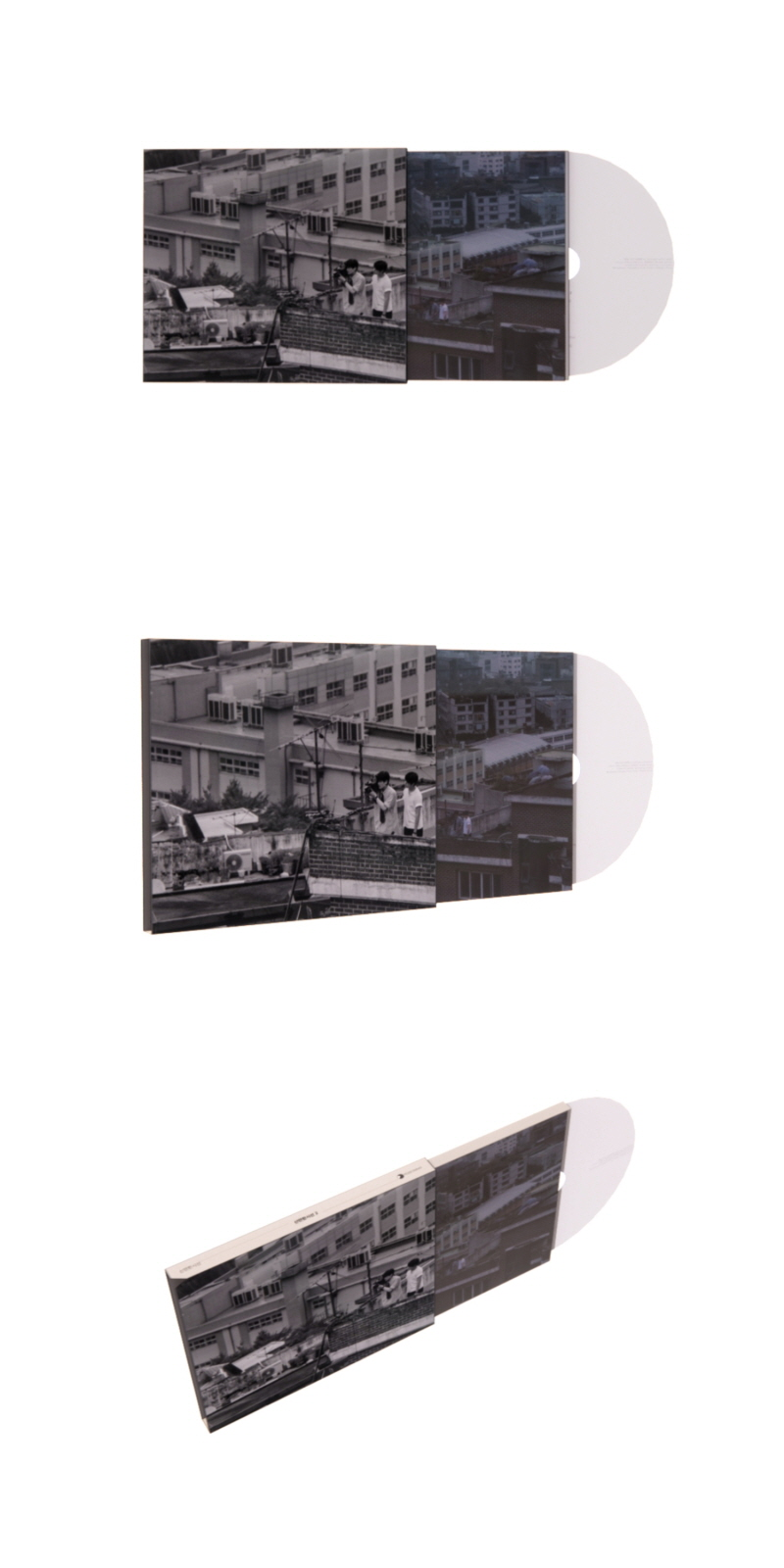
Sanmanhansiseon referred to this album as a 'failed documentary.' The songs, which began from an observer's perspective, gradually shifted to incorporate their own stories from the middle. The camera filming 'Gangneung Asan Hospital' ended up in Sanmanhansiseon's small room. Sanmanhansiseon decided to encapsulate this failure directly into the album. Failure is also a process of growth. By completing 16 songs, they gained the ability to unfold new narratives and to lead and coordinate prominent senior and fellow musicians. They were deeply involved in the mixing, persistently pursuing the sound they desired.
Above all, there were still good songs, despite the changes. A casually spoken remark pierces through this album.
“It's thrilling that 16 songs, none of which we made half-heartedly, have come together. We never lied once while making these 16 songs.”
(Kim Hak-sun / Pop Music Critic)
Author: Sanmanhansiseon
Publisher: Mound Media